Best Educational Apps for Kids in 2026: What Actually Teaches (And What Just Entertains)
8 kids' learning apps reviewed by age group — toddlers through early schoolers. The subscription math is brutal: here's when free is genuinely good enough.

Written by Gleb
•5 min read
Before the app list: a note on cost.
If you put three educational apps on a tablet at $9.99/month each, you're spending $360/year on learning apps for a child who might abandon all of them in six weeks. That's not a hypothetical — it's a pattern parents repeat constantly.
The good news: the best free options in this category are genuinely good. Khan Academy Kids is the clearest example. The paid apps are better in specific ways — more content, better personalization, more structure — but the free tier threshold is higher here than in most app categories.
With that context: here's what each app does, who it's for, and whether the subscription is worth it.
For Toddlers (Ages 1–4)
Pok Pok — Sensory Play, Apple Design Award Winner

Pok Pok isn't a curriculum app — it's a collection of beautifully designed digital toys that let toddlers explore cause and effect through sound, motion, and interaction. There's no scoring, no instructions, no correct answers. A child picks up a virtual instrument and things happen. They tap a surface and it responds.
It won an Apple Design Award, and the design philosophy is backed by child development research: open-ended play builds curiosity and exploration skills that structured learning apps don't.
Subscription: $2.99/month or $29.99/year. Worth it for the 1–4 age range specifically — there's very little high-quality software for this age.
Note: Pok Pok also appears in our Kids Creativity roundup for its creative play features.
Cubtale — Mini-Games Without the Overwhelm
Cubtale is a collection of simple educational mini-games for toddlers and preschoolers: colors, shapes, matching, early numbers. Games are deliberately short (30–60 seconds each) and require no reading ability to navigate. A child can use it independently at age 2.
Good option if you want something structured and educational for young toddlers without the production-scale subscription of larger platforms.
Preschool (Ages 2–6)
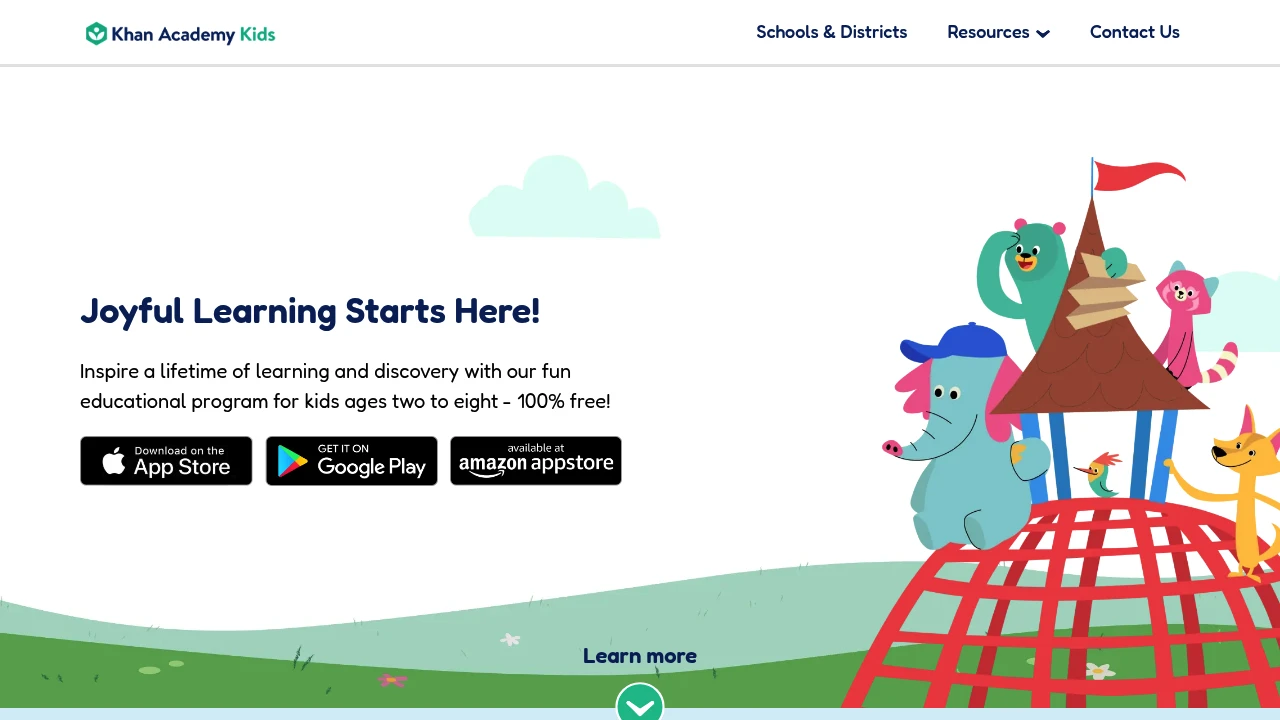
Khan Academy Kids — The Best Free App in This Category
No ads. No subscription. No in-app purchases. No time limits. Khan Academy Kids covers reading, math, social-emotional learning, and creative activities for ages 2–8 — and it's genuinely free, not "free with a paywall after 5 minutes."
The content is thorough: letter recognition and phonics, numbers and counting, shapes, drawing, and age-appropriate reading comprehension. The characters (Kodi the bear, etc.) are engaging without being overstimulating.
If someone asks "which educational app should I get first?", the answer is Khan Academy Kids. Download it before evaluating anything else.
ABCmouse — Full Curriculum, Full Price
ABCmouse is a comprehensive early learning platform covering reading, math, science, and art for ages 2–8. It has over 10,000 activities organized into a structured learning path with reading levels and progress tracking.
The breadth is its main advantage: it's genuinely a curriculum, not a collection of games. The limitation is the price ($12.99/month or $59.99/year after a free trial) and the interface, which can feel overwhelming because of how much content exists.
Best for: families who want structured, trackable progress across multiple subjects and are willing to pay for it. If you primarily want reading, Homer is more focused at a similar price.
Lingokids — English Learning for Young Children
Lingokids teaches English through games, songs, and interactive activities for ages 2–8. It's particularly strong for families where English is a second language — the content is designed for early English acquisition, not just vocabulary review.
Over 600 activities across reading, writing, listening, and speaking. Subscription: $9.99/month or $79.99/year. A 7-day free trial is available.
Ages 4–8
Homer — Personalized Reading Program
Homer (now called Begin) focuses specifically on reading — phonics, sight words, and early comprehension — with a personalization layer that adapts to your child's interests. A child who likes dinosaurs gets dinosaur-themed reading lessons. This matters: engagement drops sharply when content is irrelevant to the child.
The structured reading path is more systematic than Khan Academy Kids, and the personalization works better than ABCmouse's broader approach. Subscription: $9.99/month or $59.99/year.
Best for: children aged 3–8 where reading is the primary focus and you want something that adapts to their interests.
Duolingo ABC — Reading, Free, From Duolingo
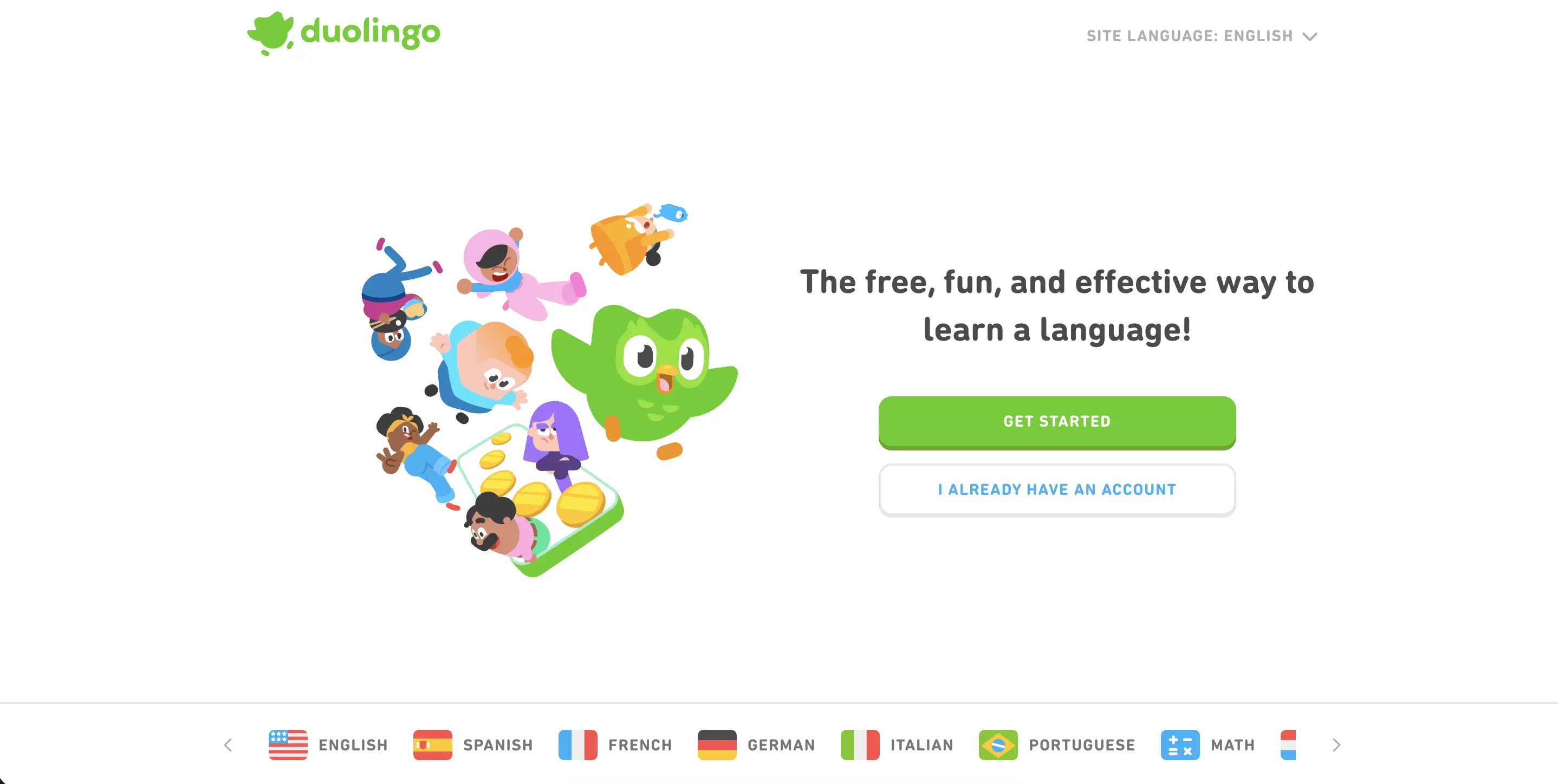
Duolingo ABC teaches letter sounds, phonics, and early reading skills for children aged 3–6. It's from the same team behind Duolingo and uses a similar short-session, gamified approach. Completely free.
The scope is narrower than Homer or Khan Academy Kids — it's specifically focused on learning to read, not a full curriculum. But for that specific goal (phonics and early reading), it's well-designed and costs nothing.
Play-Based Learning
Toca Boca World — Creative Play at Scale
Toca Boca World is a large open-ended digital dollhouse — apartments, shops, parks, and characters you can move through imaginative play scenarios. There's no educational structure or curriculum, but it develops narrative thinking, creativity, and fine motor skills through play.
The base app is free; the full world of content requires a subscription ($6.99/month or $39.99/year) or individual in-app purchases. For ages 4–9 who've outgrown purely educational apps.
Note: Toca Boca also appears in our Kids Creativity roundup.
Decks — Memory and Tower of Hanoi, Without the Reward Loop
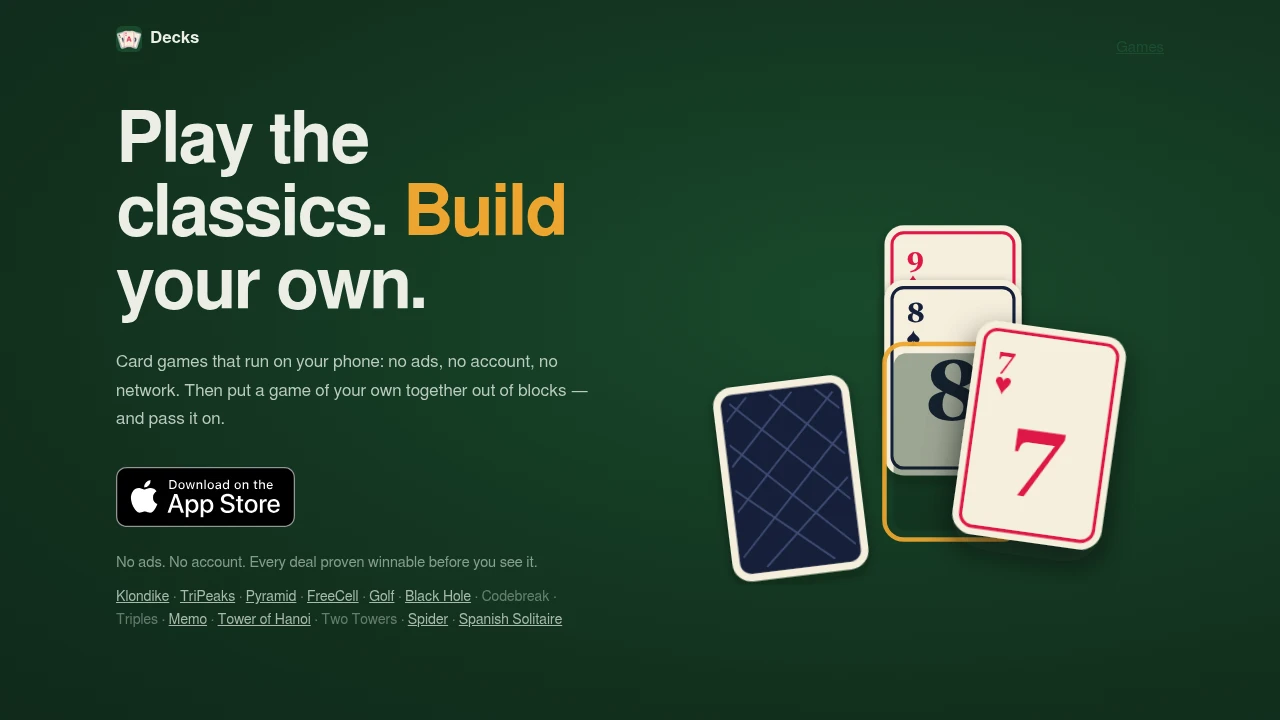
Decks is a card-game app — mostly solitaire, built for adults — but two of its games are the logic puzzles teachers have used for decades: Memory (cards face down, open two, keep the pairs; boards from 10 to 26 pairs) and Tower of Hanoi (move the stack one card at a time, a lower card only onto a higher one; the app shows the minimum number of moves). No characters, no stickers, no streaks.
Why it's on this list at all: no ads, no account, nothing collected about the child, and it works offline on a plane. The free version has a daily limit on rounds; a subscription lifts it, and there is no purchase prompt inside a game. For ages 5+ who prefer a puzzle to a story — and for the parent, there's Spider.
The Subscription Math
If your child is 3 and you're considering multiple apps:
| App | Price | Age Range |
|---|---|---|
| Khan Academy Kids | Free | 2–8y |
| Duolingo ABC | Free | 3–6y |
| Pok Pok | $29.99/yr | 1–4y |
| Homer | $59.99/yr | 3–8y |
| ABCmouse | $59.99/yr | 2–8y |
| Lingokids | $79.99/yr | 2–8y |
Start with the free options. If your child engages with them and you want more — then evaluate paid options for the specific gap (reading depth → Homer, full curriculum → ABCmouse, English acquisition → Lingokids).
Browse all Educational Apps →
Next week: Family Safety & Location Apps — GPS tracking, check-in features, and what Life360's 60 million users actually get.